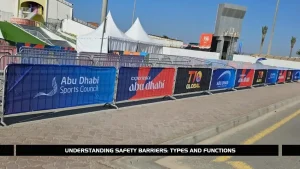
Understanding Safety Barriers: Types and Functions
Safety barriers are crucial in protecting people and property in various environments. These protective structures come in different types, each designed to serve specific functions. Broadly, safety barriers can be categorized into temporary and permanent installations.
Temporary barriers are often used in construction sites, road works, or events. They’re easily movable and can be quickly deployed or removed as needed. Examples include plastic water barriers, metal crowd control barriers, and traffic cones.
On the other hand, permanent barriers are fixed structures designed for long-term use. These include concrete barriers on motorways, metal railings in industrial settings, and bollards in pedestrian areas.
The materials used for safety barriers vary depending on their purpose and location. Common materials include:
- Metal: Sturdy and durable, often used for permanent installations.
- Concrete: Offers high impact resistance, ideal for road safety.
- Plastic: Lightweight and cost-effective, suitable for temporary barriers.
Safety barriers serve multiple functions, including:
- Traffic control and separation
- Fall prevention
- Crowd management
- Protection from machinery or hazardous areas
Crowd Control Barriers: Ensuring Order and Safety at Large Gatherings
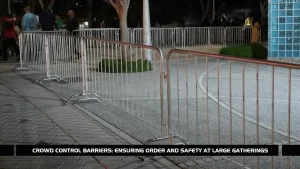
Crowd control barriers are essential tools for maintaining order and safety at large gatherings. These versatile structures are crucial in effective crowd management, queue management, and pedestrian flow control. At events ranging from concerts and festivals to sporting matches and public demonstrations, crowd control barriers help organizers create designated areas, guide attendees, and prevent potential hazards.
When implemented correctly, crowd control barriers can significantly improve event crowd control by establishing clear pathways and separating different zones. This not only enhances the overall experience for attendees but also facilitates smoother operations for event staff and security personnel. Moreover, well-placed barriers can assist in managing queues efficiently, reducing wait times and frustration amongst participants.
In addition to their practical applications, crowd control barriers serve as visual cues that subtly influence behaviour. They encourage orderly movement and discourage unauthorized access to restricted areas. By strategically positioning these barriers, event planners can optimize pedestrian flow, minimize congestion, and create a safer environment for all involved.
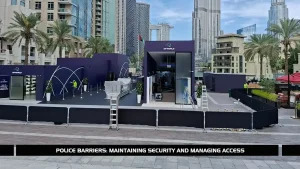
Police Barriers: Maintaining Security and Managing Access
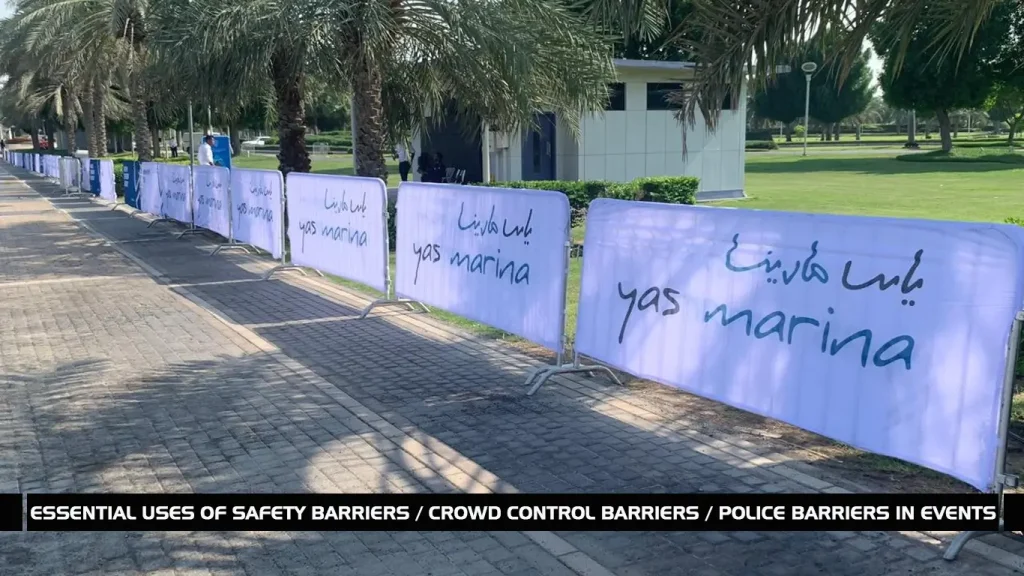
Police barriers, also known as police barricades, are important for public safety and crowd control. They are used to create temporary boundaries, direct foot traffic, and restrict access to specific areas. Police barriers are typically made of strong yet lightweight materials like steel or aluminum, which makes them easy to set up and move.
In the UAE & KSA, police barriers are commonly used for a wide range of purposes, including cordoning off areas during public gatherings, and managing queues at large-scale events. They are particularly effective in crowded urban environments, where they can help prevent unauthorized access to sensitive locations or guide pedestrians along designated routes.
One of the key advantages of police barriers is their flexibility. They can be quickly assembled and disassembled, allowing law enforcement to adapt to rapidly changing situations. Additionally, many modern police barriers feature interlocking designs, enabling officers to create continuous barricades of varying lengths and configurations as needed.
While primarily associated with law enforcement, police barriers are also utilized by event organizers, security firms, and local authorities to ensure public safety and maintain order in various settings. Their effectiveness in crowd management and access control makes them an indispensable tool for those responsible for overseeing large gatherings or securing specific areas.
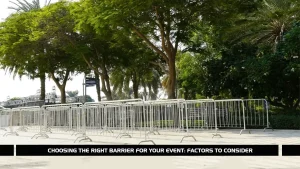
Choosing the Right Barrier for Your Event: Factors to Consider
Safety. Several factors should be taken into account to ensure you choose the most suitable option.
Firstly, consider the event size. Larger gatherings may require more robust and extensive barrier systems compared to smaller, intimate affairs. The venue layout is equally important; assess the space and identify potential bottlenecks or high-traffic areas that may need additional crowd control measures.
Conducting a thorough risk assessment is essential. This will help you identify potential hazards and determine the level of crowd management required. Based on this assessment, you can select barriers that offer the right balance of security and accessibility.
Barrier durability is another crucial factor. For outdoor events or those lasting multiple days, opt for weather-resistant materials that can withstand various conditions. Additionally, consider the ease of deployment. Barriers that are quick to set up and dismantle can save valuable time and resources, especially for events with tight schedules.